AFSP Conference 2026 – 'Come as you are: Lived experience as our resource for training, practice and research'
The AFSP Annual Conference 2026 will be a hybrid conference combining a full face-to-face programme, plus evening meal and entertainment, with an online programme for delegates attending remotely.
Ticket options:
2-day ticket, in-person
1-day ticket, in-person
Virtual ticket, 2-day online
Dinner ticket, optional
Doubletree by Hilton Glasgow Central Hotel
36 Cambridge Street,
Glasgow
G2 3HN
and Online
Organiser
Association for Family and Systemic Psychotherapy
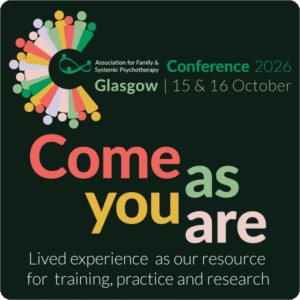
After celebrating AFSP’s 50th anniversary last year, the AFSP Conference 2026 looks ahead to how we continue to grow a field that is clinically grounded, socially responsive, and attentive to what people have lived through. ‘Come as you are’ invites us to treat lived experience as a resource we can develop with skill and care – shaping how we train, practise, supervise and research as systemic psychotherapists.
In Glasgow, the conference brings systemic ideas into conversation with the contexts that press on our work: inequality, migration, class, neurodiversity and polarisation – alongside the different forms of resistance, growth and resilience (both collective and personal) that show up in relationships and services.
We will explore lived experience as something we can lean into with skill and care: a source of knowledge, an ethical stance, and a way of staying relationally responsible in changing social worlds. We will also attend to recursiveness – how experience shapes practice, how practice reshapes us as learners, and how ongoing systemic work informs what we notice, what we ask, and what we build as knowledge through research.
Across participatory keynotes, panels, co-created workshops and creative encounters, the conference is designed for participation rather than performance, with space for emerging and quieter voices alongside established contributors, and learning that travels back into therapy rooms, training spaces, supervision, and communities.
We are pleased to announce an amazing evening of dining together and a specially curated night of entertainment, celebrating Scottish culture with poetry, comedy, music and dance. Come and join us for an evening of good food and entertainment amongst friends and colleagues.
The Scottish Makar, Peter Mackay will welcome us and start the evening with some poetry. This will be followed by dinner, after which, comedian Elaine Malcolmson will bring some humour into the room and plentiful laughter.
After dinner we move into the final part of the evening with some lively music and dance led by Chitterybite Ceilidh Band.
Please note: You will need to purchase a dinner ticket to enjoy the poetry and comedy. However, everyone will be welcome to the Ceilidh entertainment after the dinner and desserts. The Ceilidh band will start playing from around 21:15.
Tickets for the conference dinner are on sale, priced at £45 per person and includes a two course buffet dinner. They can be purchased when you book your conference ticket using the booking form. Alternatively, if you wish to purchase a dinner ticket after you have purchased your conference ticket, please contact Mint Events on [email protected] to add this on.
Chitterybite are a dynamic Scottish ceilidh collective and will bring top-quality live music to the conference cultural evening. Featuring outstanding musicians on fiddle, accordion, piano, guitar, mandolin, bouzouki and whistle, the band plays an eclectic mix of traditional Scottish ceilidh and contemporary songs. Every line-up includes an expert caller to guide you through the dances and keep the energy high. Acoustic and roots sets are also available for when you need a breather from the dancefloor.
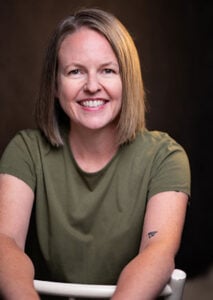 Elaine Malcolmson is an award-winning comedian, writer and actor and has worked for and appeared on various TV and radio shows. She has performed her comedy shows all over the place including the Reykjavik Fringe, Glasgow International Comedy Festival, Edinburgh Fringe, the New York Comedy Festival and Gothenburg Fringe.
Currently a regular on BBC Scotland’s Breaking the News, you may recognise her as Penny from BBC’s fantastic Soft Border Patrol.
‘terrific and unique’ – Broadway Baby
‘bone-dry and talented…exquisite material’ – Edinburgh Evening News
‘a downbeat delight’ – List
Workshop bookings for in-person attendees are now open.
There will be up to 33 systemic CPD hours available to attendees in total, including recorded workshops.
The full programme is available here.
You can check which workshops are available at each session below and on the programme page.
For sessions A to D the workshop listed first will be broadcast on the live stream for online attendees.
Day 1 – Thursday 15 October – Session A
- Glasgow irreverence and resistance: Place, positioning and therapeutic identity – Susan MacGregor & David Jenkinson
- Me, myself and AI – Marianne Le Coyte Grinney
- Using systemic polarities and context-reflexivity for work with gender diverse and transgender young people – Sarah Favier & Dr Claudia Zitz
- Billowing boundaries – negotiating meaningful relationships with clients beyond the therapy room – Shaheen Syedain & Megan Charles
- Staying in relationship when patriarchal ideas emerge in therapy – Kat Smithson & Alex Millham
- Power and you – Dr Mark Huhnen
- Made a mistake? Fret not… Exploring ideas for turning missteps into opportunities for student and trainer learning – Dr Kate Hall & Dr Helena Rose
Day 1 – Thursday 15 October – Session B
- Messing with words: Collaborations, responses, translations and betrayals – Pàdraig MacAoidh (Peter Mackay)
- Processing a supervisor’s emotional response to issues of power, privilege and race in supervision of supervision using PPRR – Parveen Kaur & John Burnham
- Single session thinking in a Scottish CAMHS context – Gillian Petrie & Dr Clair Gilbert
- The Football Families Project: Learning from practice – Sezer Fahri
- Holding onto hope, talking and being with heart: Towards building home: Centring narratives of gain and moving away from narratives of loss – Anees Hakim & Shakila Emmanuel
- The domino effect: Stories, systems, and the power of being witnessed – Hazel Kent & Jon Mungate
- Becoming-with at the margins of inquiry – Jennifer McKinney
Day 2 – Friday 16 October – Session C
- Family therapy and euthanasia for psychiatric suffering: Reflections on the person of the therapist – Prof Peter Rober
- Within and beyond the journal: Publishing your systemic ideas – Prof Liz Forbat, Prof Andreas Vossler & Dr Sarah Helps
- From stuckness to loving connection: How Ketamine-assisted couples therapy creates new possibilities for therapeutic change – Agnieszka Religa
- Developing emotional reflexivity and psychological safety in clinical practice, supervision and teams – Hendrix Hammond & Melissa Roberts
- Our wee minds matter – in life, therapeutic practice and supervision – Sally Fraser
- Setting the BEARS free – Paul Hackett & Heidi Karamat Ali
- Class, capitalism and the clinical encounter: Working with contradiction in systemic practice – Daniel McGowan
Day 2 – Friday 16 October – Session D
- Person of the therapist: Lived experience as a clinical resource in supervision, psychosexual practice, and clinician development – Dr Anthony Pennant
- Embodied engagement with systemic ideas (No PowerPoint or sitting still!) – Dr Matt Selman, Dr Linzi Smeaton, Dr Sara Heary, Dr Kate Gething & Dr Lauren Mawn
- The quiet voices that shape us. Listening to our own grief in the work we do – Samantha Petrie & David Glass
- Who’s afraid of the theory wolf? An exploration of where you are and how you might be in relation to theory – Dr Sarah Helps, Dr Glenn Larner & Dr David Pocock
- Externalising and internalised other interviewing: A relational approach to understanding the experience of voice-hearing – Heleni-Georgia Andreadi & Dominic Lyne
- Deconstructing ‘domestic abuse’ as an embodied lived experience for families and therapists – Sian Kilcommons
- Use of bodily self of the therapist – embodied reflexivity – Dawn Thibert
Day 1 & 2 – ongoing interactive workshop display
- Walking identity: The labyrinth as a living systemic practice – option 1 – Dr Ana Draper, Eleanor Osman & Poppy Thorne
Find out more about the workshops
We are excited to share further details of the keynote presentations
Come as you are – but bring the right story: Poverty, power and the uneasy politics of lived experience
Darren McGarvey
We are increasingly invited to bring lived experience into therapy, training, research and public debate – but are all stories equally welcome, and who decides which ones count? Drawing on themes across his writing, Darren McGarvey explores how poverty, power and social distance shape who gets heard, while asking what happens when personal pain becomes testimony, or a marketable commodity.
If lived experience is a resource, what responsibilities accompany its use?
Who benefits when stories are shared – and what might it cost the
storyteller? Can people be heard without being simplified, or expected to
perform the “right” kind of story?
Following Darren’s talk, the audience will be invited into an interactive
conversation: responding to these tensions, questioning assumptions and reflecting together on how we might engage with lived experience in ways that are more relational, ethical and systemically aware.
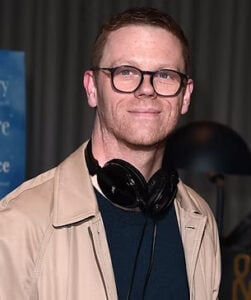
Darren McGarvey is a Scottish author, columnist, broadcaster, and rapper (Loki) known for insightful commentary on social issues, poverty, and inequality. His acclaimed debut, Poverty Safari (2017), won the 2018 Orwell Prize. A former rapper-in-residence for Police Scotland’s Violence Reduction Unit, he explores trauma, addiction, and social class and uses his experience to advocate for a deeper understanding of social deprivation, often focusing on the trauma roots of societal challenges.
Identity and belonging – the importance of religion, faith and spirituality in therapeutic spaces
Rabbi Charley Baginsky, Dr Rachel Abedi & Hazel Hyslop
What happens when belief matters deeply to someone, but they are unsure whether there is room to speak about it in therapy? Bringing together clinical and faith perspectives, this plenary will look at the assumptions people encounter, the effect those assumptions have on trust, and the ways the wider world enters the therapeutic space.
Holding in mind intersectionality with race, ethnicity and culture, we’ll consider what clinicians can take into practice: how to ask without presuming, listening whilst discerning conflated narratives from wider societal discourses, and recognise when something significant has been left unsaid. The speakers will also highlight the difficulties of being positioned as a voice for the whole community. They will ‘come as they are’ sharing the richness and complexity of their faith identities; both the apparent and the hidden to challenge this reductionist approach perpetuated by extremists, the media and politicians.
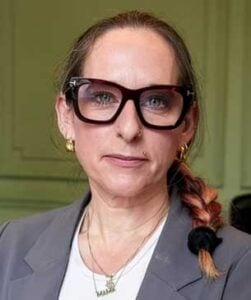
Rabbi Charley Baginsky is the UK’s most senior female rabbi. She is Co-Lead of The Movement for Progressive Judaism, Britain’s largest Jewish movement by number of communities. Her work includes exploring identity, belonging, interfaith relationships and how communities navigate difference and polarisation. She is a regular contributor to Thought for the Day on BBC Radio 4 and a signatory to the Drumlanrig Muslim-Jewish Reconciliation Accords.
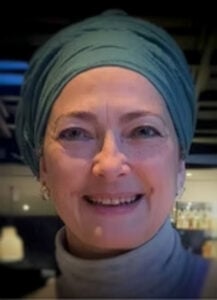 Dr Rachel Abedi is a Child and Adolescent Psychotherapist with a background in CAMHS, schools and the third sector. She has taught on various post-graduate courses at the Tavistock & Portman, and is a doctoral research supervisor. The focus of Rachel’s research and practice is how intersectional aspects of identity – particularly faith – affect mental healthcare for children. The significance of faith identity is rarely fully considered in mainstream trainings and practice, despite the consequences of ignoring or making assumptions about faith when working with families. This has a particular impact on Muslim families, mainly due to socio-political attitudes towards Muslims, racism, poverty and stigma, which combine to create a sense that therapy is ‘not for us’.
In 2022, Rachel began piloting free, collaborative, community-based child psychotherapy services for children and young people of Muslim heritage background aged 2 – 25, hoping to build trust in communities and offer accessible, effective treatment. She went on to found The Reflection Project, a charity developing this work across London and beyond. TRP’s 14-strong multidisciplinary team currently delivers services including therapy, parent work, workshops and training for child mental health professionals.
Rachel regularly contributes to conferences, publications and research to discuss the TRP model and the need to consider faith identity in mainstream trainings and service delivery.
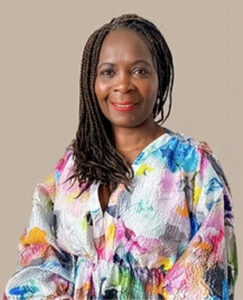
Hazel Hyslop is originally from Trinidad and Tobago and came to the UK in 1991. She trained as a registered mental health nurse and studied psychology before specialising in systemic and family psychotherapy and later coaching.
Hazel is a UKCP-registered systemic psychotherapist, systemic supervisor, trainer and accredited executive coach, with over 30 years’ experience across health, social care, education and organisational settings. She currently works with the private, third and public sector organisations, providing leadership coaching, therapy, training and reflective spaces. Her work is grounded in relational and systemic thinking, with particular interests in workplace wellbeing, identity, values and belonging.
Hazel also has a particular interest in creating spaces that support women’s growth and transformation. She developed Sistas Circles, a reflective and relational programme for women from the Global Majority, offering a space for connection, self-discovery, healing and belonging.
Hazel is the author of Bringing Your Heart to Work: A Seven-Step Journey to Mental Health and Wellbeing, published in 2025 as part of the UKCP Psychotherapy Matters series and warmly received with five-star reviews. She is currently contributing a chapter applying systemic principles to team coaching for an Association for Coaching publication. She also delivers workshops and speaking events, including reflective work with Women in Ministry in the Church of England.
Hazel is a practising Christian and her faith is an integral part of her life. Outside work, she enjoys sea swimming, African djembe drumming, Pilates, yoga, dancing, singing and spending time in nature.
Empty promises or paradigm shifting? Learning and dilemmas from 20 years of user involvement and engagement
Prof Liz Forbat, Dr Ramón Karamat Ali & Moyosore Olorunoje
Patient and Public Involvement and Engagement (PPIE) is frequently cited as a method to generating more valid, impactful, and inclusive outcomes. However, the realities of good quality involvement well are not straightforward.
This session will open dialogue about what genuine involvement looks like in practice, inviting participants to move beyond idealised notions and engage with the messy realities. Moving between theory and practice – from Foucault to lived experience – participants will reflect on their own assumptions, practices, and positionality in relation to PPIE.
We will interrogate what it means move toward a genuine openness to question, share power, and embrace complexity. This session aims to support more honest, reflective, and transformative approaches to collaboration with patients, families, and the public.
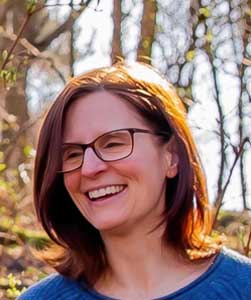 Professor Liz Forbat is a research psychologist and family therapist. Her research and clinical practice focus on how families and relationships are impacted when someone gets ill, for example with cancer or other life-limiting and life-threatening conditions.
Professor Forbat’s research projects centralise patient/carer involvement, to ensure that the work she does is always grounded in their priorities.
Professor Forbat also supervises doctoral students on topics such as family and professional relationships in palliative care, prostate cancer service development.
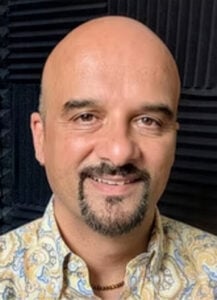
Dr Ramón Karamat Ali works as the Research Lead on the Master’s programme in Family & Systemic Psychotherapy in Manchester and is a senior lecturer at the Tavistock Centre where he offers research supervision to systemic students and is a tutor on the Family and Systemic Psychotherapy Supervision course. With a Dutch colleague he teaches on their Transcultural systemic supervision course in the Netherlands.
Ramón’s interests started with issues of identity in mixed-race individuals, as well as bilingualism. He did his doctoral research (2013) on adolescent self-harm and triadic attachment processes in families. He continues to be interested in issues of cultural competency in practice and reflective processes in the realm of teaching and training. His most recent pursuit is the area of mandated therapy for trainee family therapists, termed Personal Learning Therapy (Karamat Ali & Taylor, in press). He hopes that some of his supervision and teaching on research makes it “less scary” and enthuses students and therapists to engage with and integrate research more intentionally into their thinking and various systemic practices.
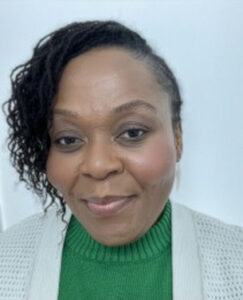
Moyosore Olorunoje is trained as a Gestalt counsellor, systemic and family psychotherapist, supervisor, and consultant. She has over 15 years of extensive experience working with both adults and children who face complex challenges. Her focus has been on providing support and guidance to individuals, couples, and families as they navigate challenges and is dedicated to helping clients overcome obstacles, fostering growth, and facilitating positive change in their lives.
Poetry, dualchas and making your own villages
Pàdraig MacAoidh (Peter Mackay)
In Gaelic culture there were traditionally different ways of ‘placing’ someone. ‘Dualchas’: who your people (family, kin, ancestors) are, and what that says about you; ‘dùthchas’: where you are from, and what that might say about you if anything; ‘gnàthas’: your own deeds and character. These might seem far removed from modern understandings of community, and how we fit into them or create them, but they can also cast an odd shadow over our sense of self and our place in the world. Peter Mackay, Scotland’s Makar, talks in this session about Gaelic poetry, belonging and the construction of ‘villages’, physical and emotional.
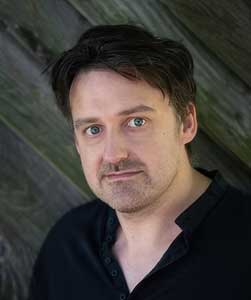
‘S ann à Leòdhas a tha Pàdraig MacAoidh, agus chaidh dà leabhar bàrdachd leis fhoillseachadh le Acair – Gu Leòr (2015) agus Nàdur De (2020) – agus pamflaid le Clutag Press, From another island (2010). ’S e àrd-ollamh aig Oilthigh Chill Rìmhinn a th’ann agus ann an 2024 chaidh ainmeachadh Makar na h-Alba.
Peter Mackay is a poet, broadcaster, translator and lecturer. He has two collections of poetry with Acair – Galore (2015) and Some Kind of (2020) – and a pamphlet, From another island (2010), with Clutag Press. Originally from the Isle of Lewis, he lives in Edinburgh and is a professor in the School of English at the University of St Andrews. In 2024 he was appointed Scottish Makar.
Stuck, uncertain and still in the room: When the way forward isn’t clear
Satinder Panesar, Dr Ged Smith and Shakira Nkanang
How do we manage when we feel stuck or uncertain in the room? What do we do when we don’t know what to do?
The presenters will share clinical experiences, where they explore moving beyond impasse, and the parts of ourselves that emerge when we feel uncertain, exploring how we might acknowledge and work with them rather than react to them?
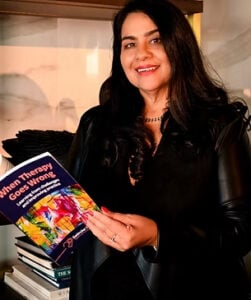
Satinder Panesar is an integrative psychotherapist with over 25 years of experience working across the third sector, NHS Greater Glasgow & Clyde, education, and private practice, both nationally and internationally. She holds an MA in Integrative Counselling from the University of Derby and is an accredited member of the British Association for Counselling & Psychotherapy (BACP) and the National Counselling & Psychotherapy Society (NCPS).
Satinder is also an individual and group clinical supervisor (University of Strathclyde), clinical consultant, and executive coach. Her clinical work spans face-to-face and remote practice with young people and adults across the UK, Europe, and internationally.
Her particular areas of interest include trauma informed practice, tradition and culture, and intersectionality. She has extensive experience supporting professionals and organisations through clinical supervision, reflective practice, coaching, and consultancy, including work with NHS professionals across multiple departments, educational settings, emergency services, Sexual Assault Referral Centres (SARCs), homelessness and refuge services, addiction services, and migrant mothers. She also works closely with senior leaders, including CEOs and directors, supporting leadership wellbeing and organisational resilience.
Satinder provides organisational consultancy, offering clinical insight to strengthen psychologically informed cultures, reflective practice, and safety within teams.
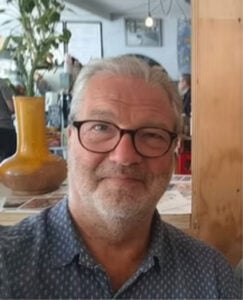 Dr Ged Smith is a family and systemic psychotherapist with 30 years’ experience; He works as consultant systemic psychotherapist now in private practice, supervisor and trainer roles. He is a visiting lecturer at The Tavistock Clinic in London, as well as to Universities of Liverpool, Hull, Manchester, Lancaster and other educational institutes abroad including staff member at Malta Institute of Family Therapy. He publishes and presents his work all over the world, and has been editor of Context, the UK magazine for family therapy and systemic practice for several years, and AFSP rep with the European Family Therapy Association. Ged is based in his hometown of Liverpool.
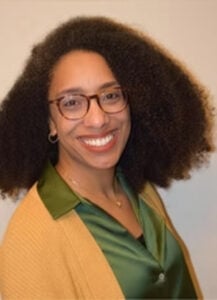 Shakira Nkanang is a systemic psychotherapist, tutor, and foundation lead for the Birmingham systemic programme. For over 20 years, Shakira has worked closely with different families, including those fostering and edge-of-care clients within NHS and social care settings, navigating complex and challenging relational dynamics. Currently, she manages a diverse private practice and delivers relational training to schools. She also serves as an AFSP representative for the UKCP College of Family, Couple and Systemic Psychotherapy (CFCSP). Shakira is deeply passionate about culturally-informed practices and has been inspired by her experiences in fostering work where she then developed the SENSES Paradigm. This framework supports the integration of dialogical reflexivity and practice, bringing embodied, compassionate curiosity into systemic spaces. SENSES is a model recently published in the Australian and New Zealand Journal of Family Therapy, 47(1).
The emotionally responsive therapist in family therapy practice
Prof Peter Rober
Psychotherapy research suggests that differences in therapeutic outcome are not primarily explained by differences between treatment models, but also by differences between therapists. Effective therapists are particularly skilled at building strong therapeutic alliances, responding to their clients’ experiences and adjusting their approach when the therapeutic process requires it. In family therapy, however, responsive attunement is especially complex: the therapist must relate to several family members at once, attend to the relationships between them and remain sensitive to what unfolds in the here and now of the session.
This plenary lecture explores the person of the therapist as an essential part of family therapy practice. Emotions are not understood solely as private experiences that individuals regulate on their own, but also as relational processes that are transmitted, amplified, soothed and carried between people. Family therapists therefore contribute to the emotional regulation of the family, while simultaneously being emotionally affected by the family process themselves.
The therapist’s central task is not to remain emotionally detached, nor to react impulsively to what the family evokes. Instead, therapists need to find a position of appropriate discomfort: sufficiently involved to be moved and responsive, while remaining able to reflect on their own experience. The therapist’s inner dialogue makes it possible to notice emotional and bodily responses, consider how they may reflect the family process and decide how they can be used constructively in the therapeutic conversation.
Using clinical examples, the lecture will illustrate how therapists can move between observing family interactions, participating in emotional co-regulation and reflecting on their own responses. Particular attention will be given to enactment, alliance ruptures, emotional vulnerability and the use of the therapist’s feelings to create space for experiences that have not yet found words. The lecture argues that effective family therapy depends not only on what therapists know or do, but also on how they use themselves as responsive, reflective and dialogical partners.
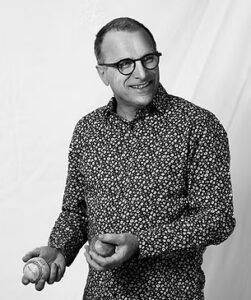 Prof Peter Rober is, first and foremost, a therapist, working with families. Furthermore he is a professor in Clinical Psychology at the Institute for Family and Sexuality Studies, Faculty of Medicine, University of Leuven, Belgium. He is also responsible for for Context – Center of Marital and Family Therapy at UPC KU Leuven.
Prof Rober’s primary research interests focus is on the family therapeutic process. In particular he is interested in the therapist’s inner dialogue and in silences in families.
Question everything you thought you knew about mental health and neurodiversity
Dr Sami Timimi
Psychiatric diagnoses rely on subjective foundations. Without empirical anchors we are left with descriptors that cannot help us identify cases that share something unique in common beyond those imposed on them by the subjectivity of the person making the diagnosis. Mistaking a descriptive category for a diagnosis has resulted in a failure to improve scientific knowledge or clinical outcomes. Instead, categories for distress and difference have expanded into consumable brands and internalized identities, most notably in the emergence of the neurodiversity paradigm. I will explain the potential problems this approach causes at the individual, community, and population level and why this results in harm, particularly to young people. I will outline some pointers for how to work without reliance on the diagnostic paradigm.
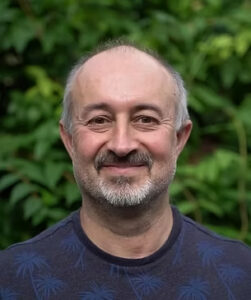
Dr Sami Timimi is a retired Child and Adolescent Psychiatrist, psychotherapist and author. He qualified as a doctor from Dundee University in 1988 and became a Member of the UK Royal College of Psychiatrists in 1992, becoming a Fellow of the college in 2012. He has many innovation awards and led multiple service developments including being the consultant for the child and adolescent team of the year at the 2023 annual Royal College of Psychiatrists awards.
He regularly presents as keynote speaker at national and international conferences and has many interviews with press, media and podcasts. He is an author who writes from a critical psychiatry perspective on topics relating to mental health and has published over a hundred and fifty articles and tens of chapters on many subjects including childhood, psychotherapy, behavioural problems, and cross-cultural psychiatry. He’s authored 7 books, co-edited 4 books, and co-authored 2 others. His latest book, first published in 2025 is Searching for Normal A New Approach to Understanding Distress and Neurodiversity.
Also of interest

See more events
Browse our events directory to find more events for family and systemic psychotherapists and practitioners.

AFSP bursary scheme
Bursaries for our 2026 conference have now been awarded.